Why Practical Life Skills Matter at Montessori Renaissance Academy

At Montessori Renaissance Academy, we believe that children are capable, curious, and eager to be part of the world around them. One of the most important ways we support this is through something called practical life.
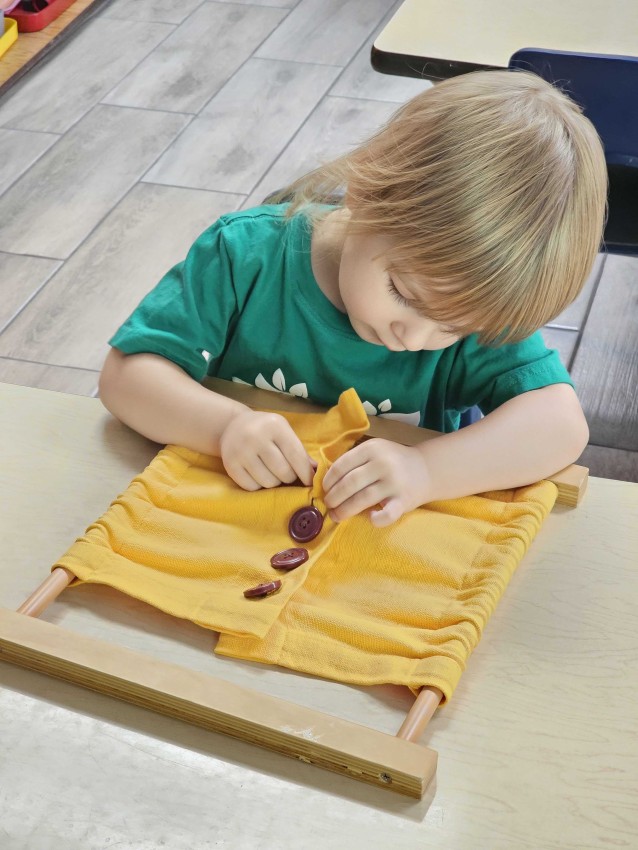
Practical life activities are just what they sound like: real tasks that children learn to do for themselves. For instance, think buttoning a coat, pouring water, setting the table, or caring for a plant. These are not filler activities. They are a critical part of how we help students grow into independent, responsible, and respectful members of their community.
Learning Through Doing
In every classroom at MRA, from toddlers through middle school, students are given the tools and time to practice daily routines. For example, this might begin with a two-year-old learning to wash their hands or a Children’s House student arranging flowers for the snack table. As students grow older, these routines become more complex, with students organizing materials, cleaning up after meals, and even planning group projects.
These tasks help children develop more than physical coordination. They build focus. They teach patience. And most of all, they support the belief that the child can do real, meaningful work.
Supporting Independence
When a child learns to do something for themselves, it’s empowering. Practical life is where independence begins. These activities give students the confidence to try, to struggle a bit, and to succeed without relying on an adult to step in.
We don’t rush in to help with a zipper or sweep up spilled water right away. We guide. We encourage. And we let the child experience the pride that comes with doing it on their own.
Building Responsibility and Respect
Practical life work also helps children understand that they are part of a community. When they wipe a table after snack or sweep up leaves tracked into the classroom, they are taking responsibility for shared spaces. These actions teach students to respect their environment and each other.
Over time, this translates into social responsibility. Children begin to notice when something needs to be done. And more importantly, they take initiative to do it.
More Than Just a Chore
To an outside observer, practical life activities might seem simple. But there’s a lot happening beneath the surface.
A toddler practicing spooning beans from one bowl to another is building fine motor control that will help with writing. Similarly, a child who carefully folds cloth napkins is preparing their hands for holding a pencil. A student who follows a sequence of steps to wash a table is also developing the same skills needed for reading, math, and science: order, logic, and concentration.
Even the layout of these activities supports learning. For example, in the early years, many practical life tasks are done from left to right. This prepares the brain for the directionality of reading and writing in English. Everything has a purpose.
Preparing for Life, Not Just School
At MRA, our goal is not just academic achievement. We are raising future adults who are capable, thoughtful, and grounded. Practical life builds the habits and mindsets that make that possible.
Instead of rushing to the next worksheet or test, we focus on helping students grow into people who care for themselves, their space, and their community. In addition, we show them that real work is meaningful and that they are capable of doing it well.
Want to see practical life in action? Schedule a tour at MRA. You’ll find toddlers scrubbing mirrors, preschoolers arranging flowers, and elementary students planning real-world projects. This is what independence looks like. This is what Montessori looks like. And we’re proud to teach it every day.