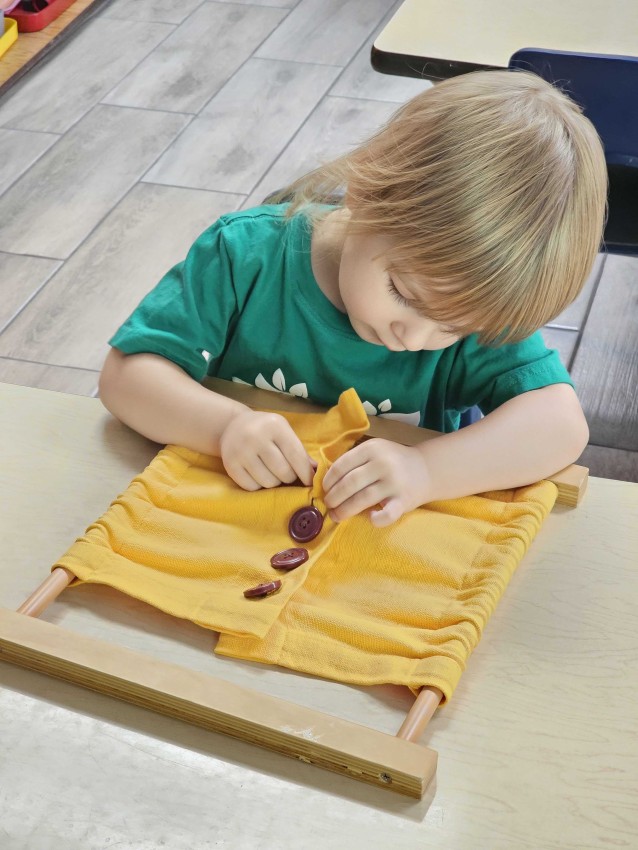
This article was sent to our parents from Miss Jaclyn, our Elementary 2 teacher.
The holidays are upon us! With a little patience (or a lot) your child can gain and practice many skills in the kitchen.
Prep Time
I know.. if you just do the prep work and cooking yourself, you can get the task done so much faster. However, having your child help with what they are able to helps them on their own journey to independence. So let’s break down ways that your child can help in the kitchen.
Every child needs to start out by washing their hands and the surface they will be cooking on. By this time of the year, students have received a lesson on hand washing and cleaning surfaces. They can easily apply this skill to your kitchen at home using nothing more than soap and water.
Toddlers
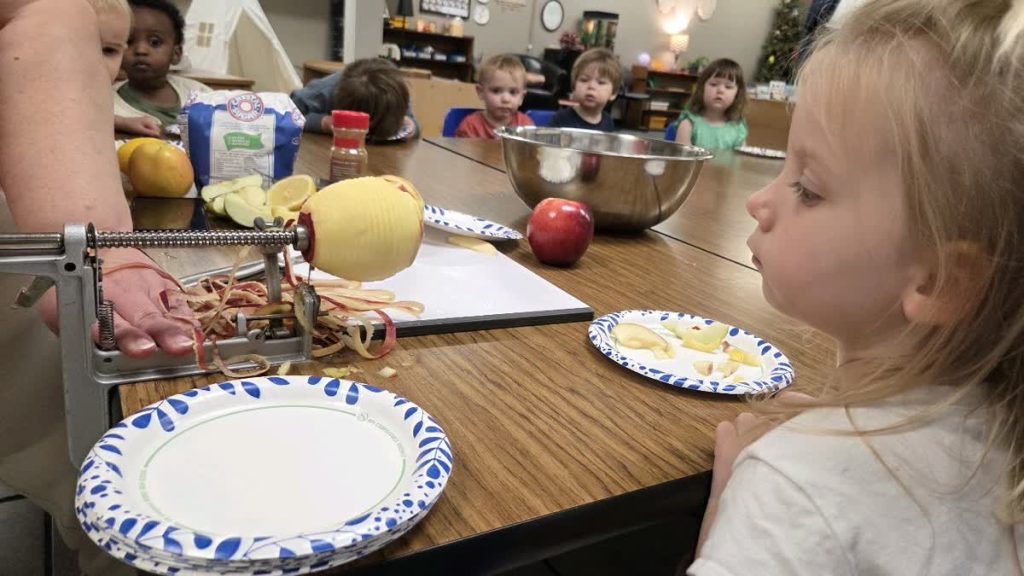
Toddlers have already had some cooking opportunities in the classroom this year. They made apple sauce, highly supervised by their teachers. The students got to use an apple spiralizer, dump the ingredients in the bowl, and had opportunities to stir the applesauce.
Even before you get to the kitchen, you can have your child help by picking out some fruits and vegetables at the grocery store for your veggie tray. Usually, this becomes what they already know they like. However, this is also a way to encourage you and your family to try something that you may not have had before. Ask your child, “What is a fruit or vegetable that looks interesting today?” When they point something out, just get one to try.
Once back in the kitchen, be sure to have a sturdy step stool ready for your child. They can be in charge of washing the fruits and veggies while you prepare something else. Once cut, your child can help you arrange the tray.
Another task this age loves is cutting out cookies using cookie cutters. This is an opportunity to teach your child about patience and waiting, as they must wait for the cookies to bake before enjoying them.
It’s fascinating how excited the child will be to eat the items off these trays come Thanksgiving Day!
Children’s House
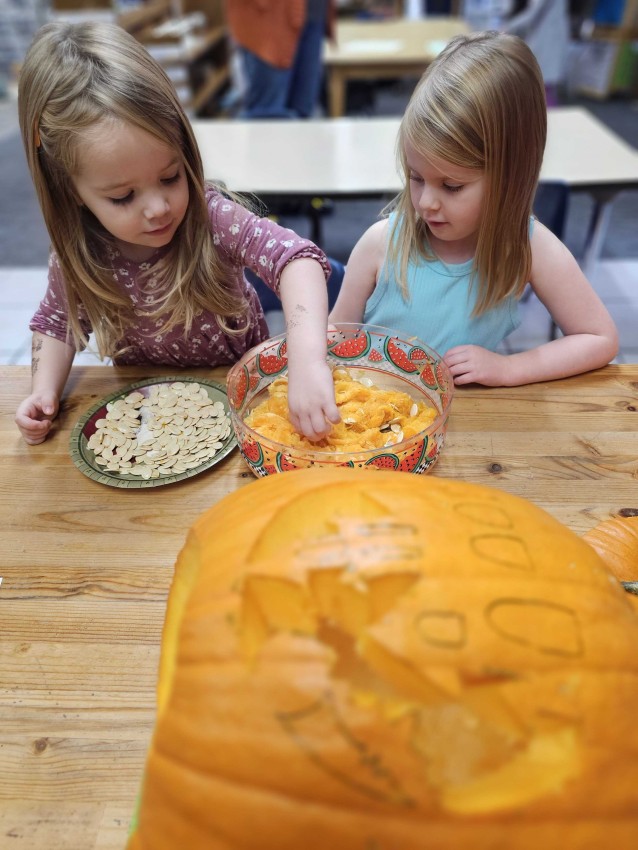
In Children’s House this year, some students have already had lessons on peeling an orange and cutting apples with an apple cutter. These lessons remind them they can do things even when they’re hard. These skills can be an asset in the kitchen at home too.
As their skills develop, children of this age are ready to mix ingredients such as pancake or other batters. This activity has a natural control of error. When they can no longer see any ingredients that still need mixing, they know they have finished. Scraping the sides of the bowl with a rubber spatula can also help your child mix the ingredients thoroughly all the way down to the bottom. Of course, they should already have the skills mentioned earlier too. This means they can help with more of the cookie-making process that comes this time of the year.
Helping with the Thanksgiving feast could also mean using real potatoes that you boil (and peel ahead of time if your family is anything like mine). Give your child a potato masher and let them mash the potatoes. This activity requires a great deal of concentration and focus, and it also gives you a chance to work on something else while you supervise your child as they complete the task.
Elementary 1
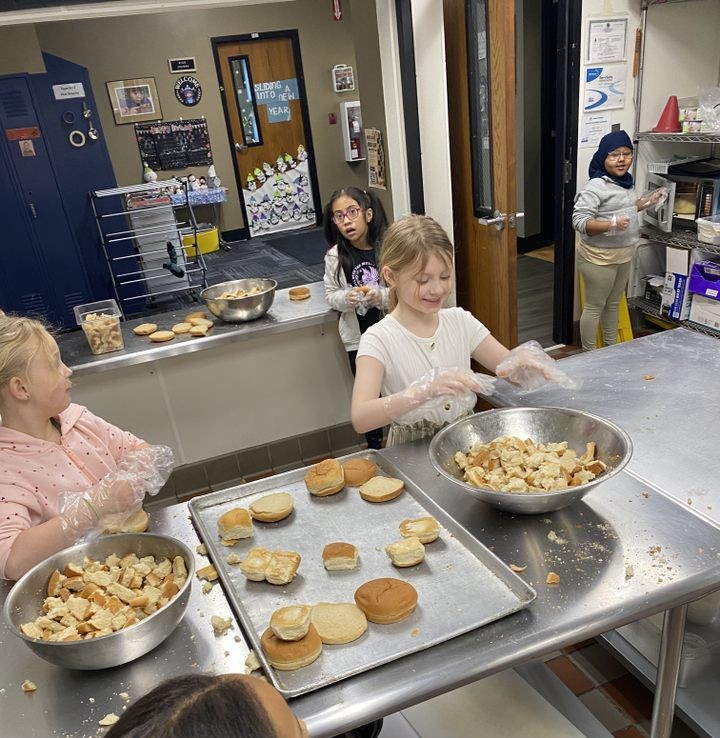
By the time the child has reached E1, their skills have developed even more. If they haven’t already practiced, now is the time to learn how to crack an egg into a separate bowl. This allows you to check for eggshells before adding the egg to your recipe.
Peeling fruits and vegetables makes a great activity for this age. So does practicing highly supervised knife skills.
In order to practice reading, children should help find the ingredients in the cupboard or refrigerator. They can also use measuring cups and spoons to measure a specific amount of each ingredient.
It is still important to supervise children when they are measuring out the ingredients. This helps ensure that they add all the ingredients in the correct amounts. The child may still confuse the tablespoon and teaspoon at this age. By supporting their careful work, however, they can have success in the kitchen.
Failures are also important. Students can learn from what went wrong. While the Children’s House student could mash the potatoes, the E1 child can wash and peel the potatoes before boiling them.
This year, the E1 students have already made some great recipes, including homemade “mashed potato” candies and fluff. They’ve also followed a recipe with help to make cheesecake bites.
Elementary 2
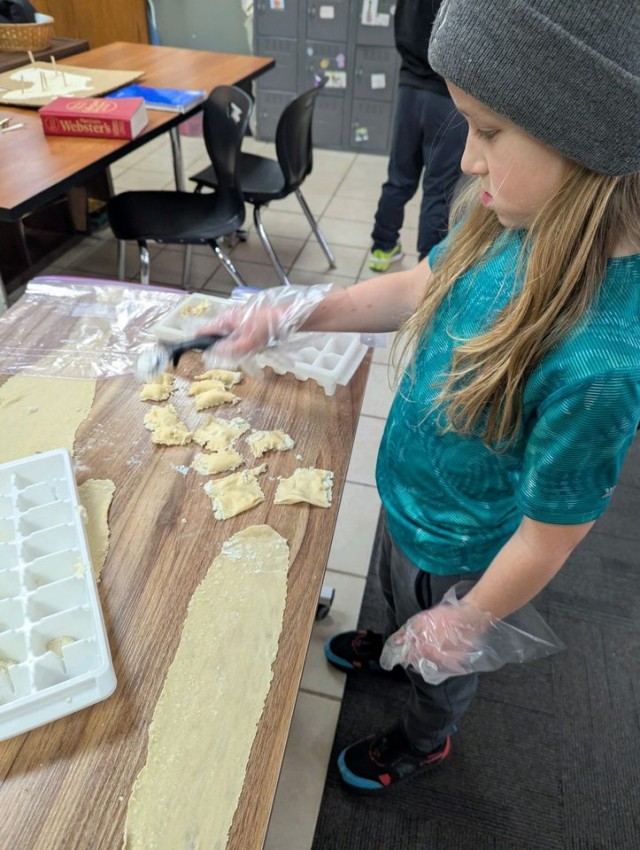
The E2 cooking experience starts long before the day in the kitchen. They begin by locating their own recipe and researching what is already available. Then they create a shopping list of the ingredients they still need.
Next, they are capable of a trip to the grocery store, where they can find the ingredients they will need. In the classroom, we look at how many servings one recipe makes and plan accordingly for our shopping adventure.
Once it is finally cooking day, the students are mostly using knives independently, cooking on a hotplate or stove, and using the oven with supervision as necessary. They also have the challenge of making sure they are mindful of dietary restrictions and allergens so that everyone in our class can participate.
We also start thinking about what we can prepare ahead of time, so that we don’t feel as rushed on the day of our event.
So far this year, the E2 students have really enjoyed making birthday popsicles and smoothies. They’ve also had the opportunity to plan and execute our Thanksgiving meal. In the upcoming weeks, we will be making homemade ravioli for our family dinner in January.
Middle School
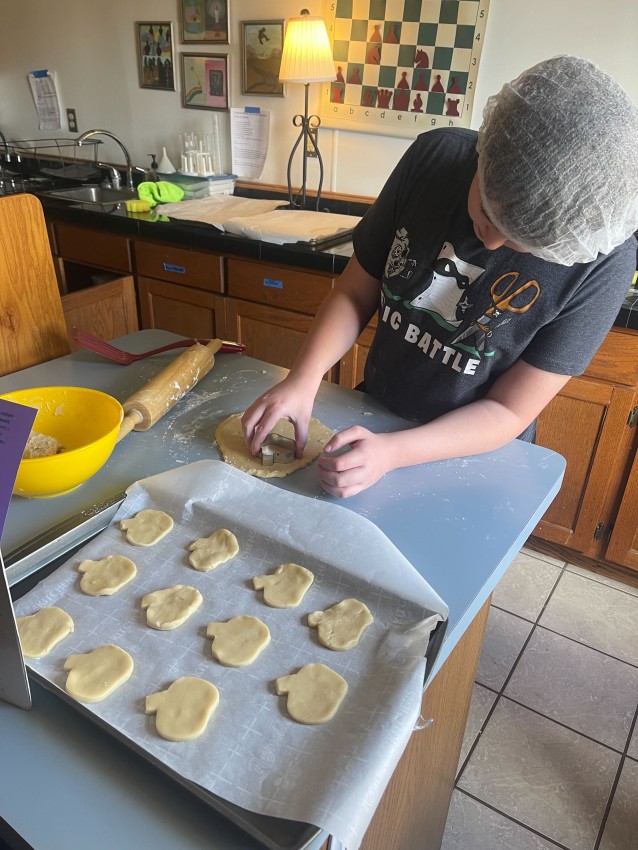
The adolescent community takes their preparations even further. They have learned how to place an online grocery order and pay attention to the most economical package sizes. They plan the menu they will serve, bake several goods each week, and think about how they can store leftovers for later if needed. At school, they sell their baked goods to help fund their end-of-year trip. They are capable of using the oven and stove independently.
Besides weekly baking and learning how to be a barista for “Cup O’ Coffee,” the Middle School students have also put artistic flair into their own fruit trays. They have learned how to make a roux and have been honing their skills to make foods that meet the dietary needs of members of our school.
These students are able to help with all aspects of the kitchen, so now you can get twice as much done in the kitchen!
Cleaning Up
Remember, every kitchen experience has a cleanup component, and your child(ren) should help with that step as well. Bringing the dishes to the sink, loading the dishwasher, and putting away the dishes are all important tasks.
Lasting Memories
I know that having kids in the kitchen takes extra time now. My brother and I were products of getting to spend time in the kitchen as kids. To this day, both of us enjoy being in the kitchen and preparing recipes for our families. Don’t miss out on those opportunities with your children as well!
To learn more about Montessori education and see our classrooms in action, schedule a tour of Montessori Renaissance Academy.