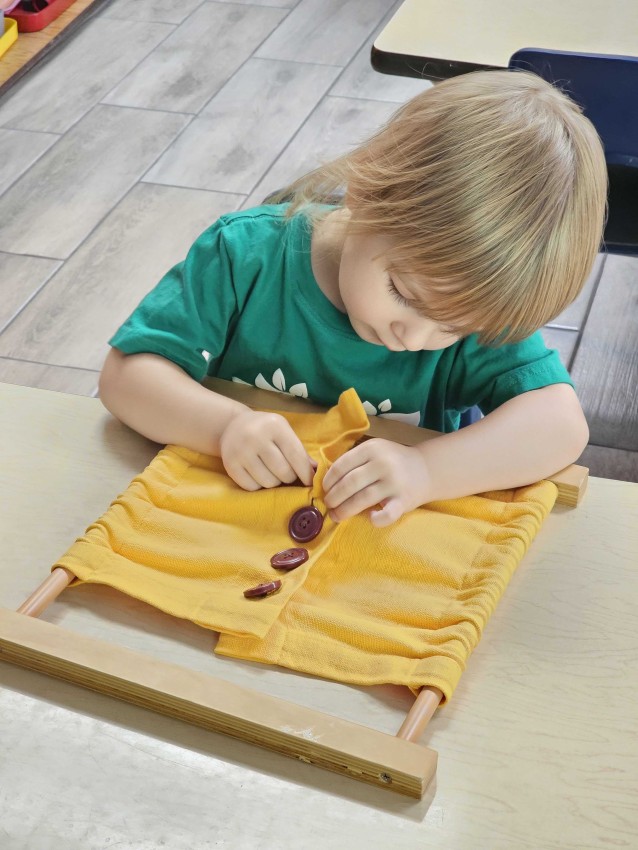

Freedom:
The real key to the child’s development, and an essential characteristic of a Montessori environment.
Four essential freedoms shape the classroom environment, and teachers intentionally provide each child with opportunities to experience them. Although these freedoms look different depending on the child’s age, they remain essential to the child’s development.
These 4 freedoms include:
1. The child must be free to choose any activity that the teacher has already presented to them.
This is true at each level. The students learn that they may only use materials that a teacher has shown them. Since the materials build in complexity, it is important that students know how to use each material correctly. Even if a child observes a lesson, they may not be ready to use the material yet. If they try to take a material they have not been shown, they will be asked to put it away, and a teacher may suggest that they work on a material they have already been shown that leads to the more advanced material.
2. The child is free to choose when he needs to do the activity.
At the Toddler and and early Children’s House levels the child can choose when he or she wants to work on this work. If it is a skill that needs to be practiced, a teacher can give multiple presentations to help the child work on it. The child repeats these skills through various activities, including monthly themed work that may interest them at different points.Later in Children’s House, students begin practicing certain areas daily to build their skills.
At the elementary level and above, teachers may set a due date for the practice. However, the child can decide which day within that time frame to complete the work in order to be ready for the next lesson. This choice allows the child to develop time management skills, but also helps the child learn about prioritizing and helping them realize that sometimes in life there are things we do not enjoy as thoroughly, but we still need to accomplish them.
3. The child is free to repeat the activity as many times as he feels the need to.
We talk to the children about mastering a work, which takes practice. The children are able to use a material until they are satisfied with their own practice. Most materials only have one or two copies, which means that when one child is using a material, other children must wait until that child returns it to the shelf. At the elementary level while the children may find the repetition not as beneficial, they are working with materials repeatedly to continue building on their own knowledge.
4. The child is free to ask for a presentation, either a new one or a representation.
Once a child has mastered a work, they are ready to move on to the next lesson. They may also choose to observe a lesson that a teacher has not yet invited them to, although they may or may not be ready to do the work independently. Students will naturally ask for new lessons in areas they are really passionate about, but the guides will also invite them to new lessons in areas that aren’t as strong in hopes of inspiring more work in those challenging areas as well.
To learn more about Montessori education and see our classrooms in action, schedule a tour of Montessori Renaissance Academy.